DDD Call for Presentations — By the Numbers

Aidan Morgan
Secretary
As our agenda has just been announced, we thought it would be a good time to take a look back at the proposals we received for presentations this year and break some of the numbers down that we thought were interesting for 2018.
Submissions
First of all, the big number; we had 201 presentation topics submitted this year, which is a big increase over the 104 we received last year. That’s nearly a doubling of the number of talks (it’s so close I think we can call it double)!
It’s a great testament to the Perth community that we’re receiving so many talks, and the number is growing each year! Keep an eye on this blog where Rob (opens in a new tab) will be posting soon on our voting breakdown.
Speakers
The 201 presentations came from 131 speakers, with 47 speakers submitting more than one talk. We even had one person submit presentations on 6 different topics!
We appreciate the amount of time it takes to submit one abstract for DDD Perth, so to those of you that submitted more than one — thank you!
Speaker Experience
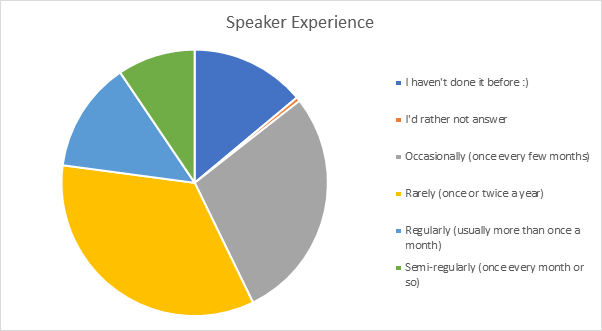
On the topic of speakers, one of the things the organising committee really wanted to see this year was an increase in the number of first time or junior speakers, I think it’s safe to say that this year we achieved that goal with 42% of speakers having little to no experience presenting.
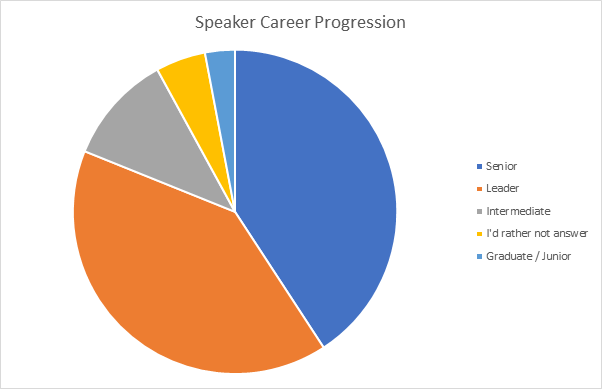
Of additional interest is the career progression of our speakers, with 19% of our speakers being in the earlier stages of their careers — definitely something the organising committee will be working on for 2019. We’re hoping more of the Perth juniors are speaking at Levelsconf (opens in a new tab) this year, honing their skills before taking the stage at DDD Perth 2019!
Tags
2018 is the first time we asked speakers to provide topic tags for their presentations. Tags are something that we as an organising committee thought would help people filter through the number of submissions when voting, but it also gives us an interesting insight to the topics that are of interest to the Perth software community.
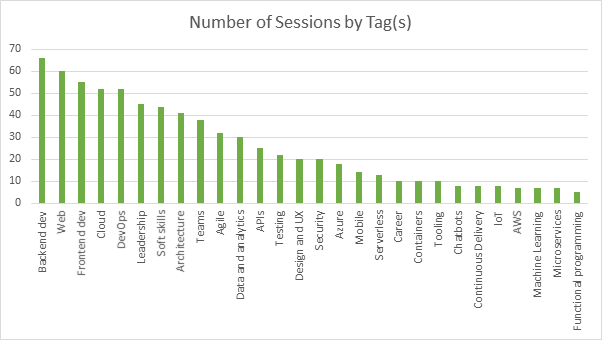
Coming out on top are Backend and Frontend/Web tags, which is to be expected given the historically developer focused nature of DDD, but the data is promising — we’re seeing more non “traditionally developer focused” topics moving up the list such as Leadership, Teams, Soft Skills, and Data and Analytics topics starting to grow in size.
This increase in diversity of topics also means we’ll be presenting an agenda this year which appeals to people from all different parts of the Perth software community.
This data is also useful for us when organising our “DDD by Night” events where we take a deep-dive into a topic in an evening. Rob (opens in a new tab) has a great write up about the first one here.
If you submitted an abstract this year but it wasn’t selected for the agenda we haven’t forgotten you, there’s a change you might be approached to speak at DDD by Night instead!
DDD By Night events will be announced throughout the year, so keep an eye on your inbox!
Session Length
We allow our speakers to specify a 45 minute “long talk” or a shorter 20 minute “short talk” format when submitting their talk,. This year the breakdown was almost 50/50 for both, with that 50/50 split present across all career progression levels.
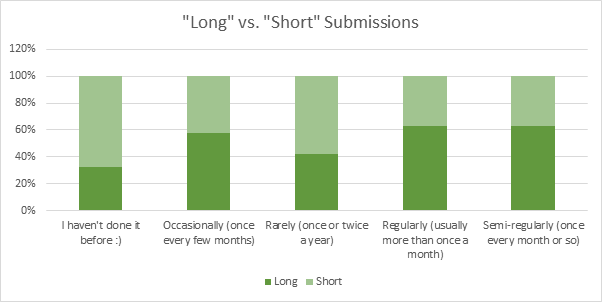
There is a noticeable difference in session length when it comes to previous speaking experience, with submissions from presenters with less speaking experience preferring the shorter length presentations.
If we were able to somehow accept all submitted talks we would have 108 hours of presentations (assuming no breaks). That is just short of the amount of time the Apollo astronauts spent getting to and from the moon!
Diversity
Diversity is a topic of great importance to the DDD organising committee, something that we work hard each year to improve. Matt (opens in a new tab) has a great write up of some of the things we’ve been doing in this space here.
Diversity can mean different things to different people, but to get an idea of how we’re tracking against our diversity goals we use a “diversity score” that takes into consideration many different variables about our speakers (including pronouns, level of experience at public speaking and seniority in current job role).
This year we’re proud to say that the people who submitted abstracts for DDD Perth come from a more diverse background than previous years with 40% of speakers coming from at least one of our identified under-represented groups.
We will always strive to continue to improve in this space, as it remains one of our core objectives — it’s heartening to see that we’re doing better each year.
Conclusion
DDD Perth keeps getting better year on year, and it’s all thanks to our amazing community who keep submitting impressive talks. Is there some data you’d like to see that we haven’t supplied here? Give us a shout!