Our Journey towards Diversity

Rebecca Waters
Chairperson
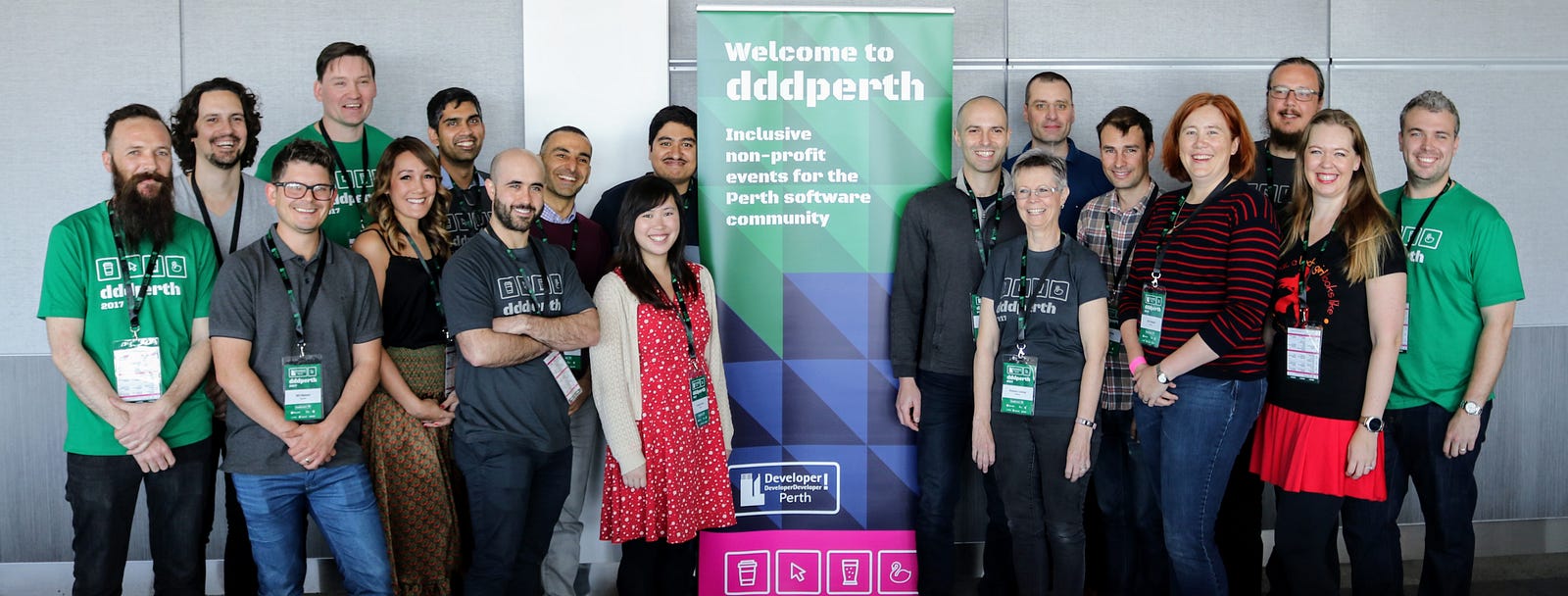
DDD Perth 2017 Speakers
DDD Perth has a tagline that reads:
DDD Perth is an inclusive non-profit event for the Perth software community. Our goal is to create an approachable conference that anyone can attend or speak at, especially people that don’t normally get to attend / speak at conferences.
It’s an admirable mission statement, if I do say so myself! DDD Perth aims to do this by adhering to a few golden DDD rules, and a few more that are DDD Perth-ified:
- Making the ticket price as low as possible ($50)
- Running the event on a Saturday
- Allowing anyone to submit about any software industry related topic
- Having a democratically chosen agenda
- Focussing on creating a safe and inclusive environment where everyone is welcome
Focussing on creating a safe and inclusive environment where everyone is welcome
The last line I’ve called out here is one I want to spend a bit of time on. In 2016, the conference was into it’s second year. The inaugural conference in 2015 went well. The founders, Matt Davies and Rob Moore might have had minor personal breakdowns and maxxed their personal credit cards to finance the venture, but on the whole they pulled it off and were ready for the challenge of a repeat performance.
So off on the conference train it went! The ticket price stayed as a low as possible. The event was on a Saturday. The Call for Presentations was broad and the voting democratic. There was a code of conduct and it was followed by all attendees.
It was also a fantastic conference. Held at the Mecure Inn, the conference ran 3 tracks, was attended by 200 people and simply was a great day. From talks on Authentication, to presenters drinking growlers on stage, the day was a success. This was the first time I managed to get to the conference and I was in awe of how enjoyable the day was.
The thing is, the safe and inclusive environment was welcoming for sure, but the agenda didn’t feature a single woman. It was something that the organisers saw, the attendees saw, the speakers saw. I’m also proud to say that in his opening address, Rob stood up and owned it. He made a pledge to do something about it for 2017.
In 2017, I joined the organising committee, as did many other talented and motivated folks.
When we came to reflect on the 2016 conference and look ahead to 2017, we set our sights on changing that.
We weren’t sure where to start, but we decided that the next step towards an inclusive conference was addressing gender diversity in speakers. There are other diversity and inclusion points to address, but as a group of volunteers, we recognised that if we were to be successful, we needed to concentrate our efforts, so we focussed on gender diversity.
As I talk about gender diversity in this post, I want to make mention of non-binary genders. In 2017, DDD Perth had no attendees or speakers that identified as anything except Female or Male. Our registration questionnaire allowed for ‘other’ genders to be included, but did not feature a free text field.
We asked our contacts in the Perth community who had experience in this area, and put that advice together with our own ideas.
We looked at two parts of forming an agenda; submissions and selection.
Submissions
When we looked at where our submissions were coming from, it was pretty evident early on that we didn’t have a big reach into the software community.
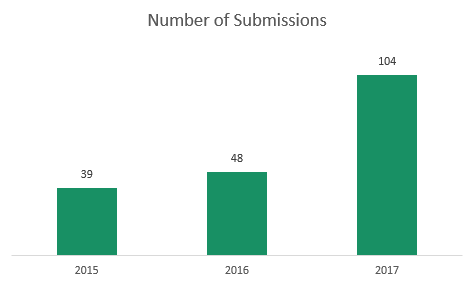
The number of submissions jumped from 48 in 2016 to 104 in 2017
Reaching Out
We reached out through our contacts to as many community groups and companies as we could. The feeling was that a bigger reach would naturally result in submissions from women.
We also spearheaded a grass roots campaign to increase diversity in submissions. We all knew of impressive women in software in Perth — who doesn’t — so we asked them to submit, and we asked them to convince their peers too as well.
Michelle @ Microsoft on Twitter
Michelle Sandford (opens in a new tab), one of Microsoft’s Top Social Media Influencers worldwide, had previously mentioned how much she enjoyed the conference, and agreed to help us promote submissions from women. Fenders, with the incomparable Mandy Michael (opens in a new tab), helped spread the word. There are many others who helped promote DDD Perth in 2017.
Flexibility in Submissions
Donna Edwards, State Delivery Manager at Readify, makes a great point in her 2017 DDD Perth talk (opens in a new tab) about criteria and the willingness of women to apply. She’s talking about attraction strategies in the workplace; looking back we applied similar thinking to our conference submission process. (I should have put a spoiler alert on this paragraph as to our success in attracting women speakers, huh?)
We took a long look at our conference submission criteria. We looked from the eyes of a first time presenter, from women, from minority groups in our community, and ultimately we removed what we thought were two barriers to submission: unconscious bias and length of talk.
The thought was that for a first time presenter, a 45 minute talk could be intimidating. We introduced 20 minute talk lengths to encourage people who maybe thought they didn’t have enough content for a long talk to still consider submitting.
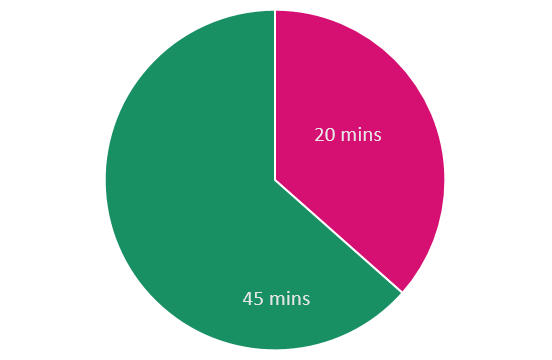
37% of 2017 talk submissions were 20 minutes in length
Unconscious Bias is an ugly thing to think about, isn’t it? Still, we forced ourselves to think on this point. Quite possibly, the people voting recognised some names and voted for those talks based on notoriety (be that fame, unconscious gender bias, unconscious race bias…the list goes on). We recognised that this could lead to our conference getting old very quick, should we only hear from the same 10 presenters every year. We decided that we would introduce anonymous voting.
I mention this whilst talking about Submissions, because we said upfront on the submission page that all identifying information would be hidden come voting time. We felt that in order to remove the barrier, we needed to be upfront about our intent. Being transparent about our process was important to us.
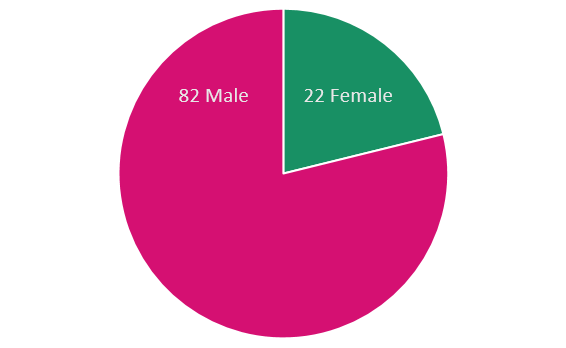
21% of submissions in 2017 included a presenter who identified as female
Selection
DDD Perth, as with all DDD conferences (opens in a new tab), has a democratically chosen agenda. What this means is that anyone is able to influence the agenda during our one week voting window.
I’ve already mentioned our anonymous voting changes. We stripped identifying information such as names and pronouns, but left experience and credentials.
However, we didn’t prohibit people mentioning the title of their talk on social media. This was a point of discussion for us; would it detract from the anonymous voting? Would it unfairly advantage those people with a following already?
Look, the answer to that is Yes. There was an advantage for people who vocally encouraged their networks to vote for them. This worked for both male and female speakers. However we felt that as well as being impossible to police, the promotion of the conference was a good byproduct. It also allowed our allies, such as Michelle (opens in a new tab), to promote the submissions by women she admired.
When it came time to tally the votes, we found that the process employed had yielded positive results.
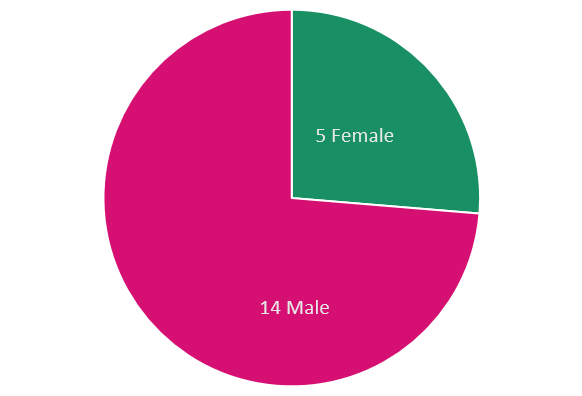
A quarter of speakers in 2017 identified as female
I also want to mention our Code of Conduct. On securing speakers, we required each person explicitly agreed to our enforceable Code of Conduct (opens in a new tab). We discussed what to do on the day if this became an issue and every volunteer knew what to do and who to contact.
Uncomfortable as confrontation is, I’m glad we spent time discussing the possibility of expelling people from the conference. It hasn’t been required yet, but that doesn’t take away from the need to be prepared.
Not there yet
As you can see in the above statistics, DDD Perth is improving, but we’re not there yet. That’s why in 2018, we have a dedicated champion, Matt Ward (opens in a new tab), to help focus our efforts, not only in gender diversity.
We’re concentrating on achieving better representation in gender, seniority, ethnicity, accessibility and role. This isn’t an exhaustive list, nor will 2018 be the perfect conference. We just hope it’s another step forward.